Where Diaspora Sits: Installing “A Seat at The Table” at New York Fashion Week
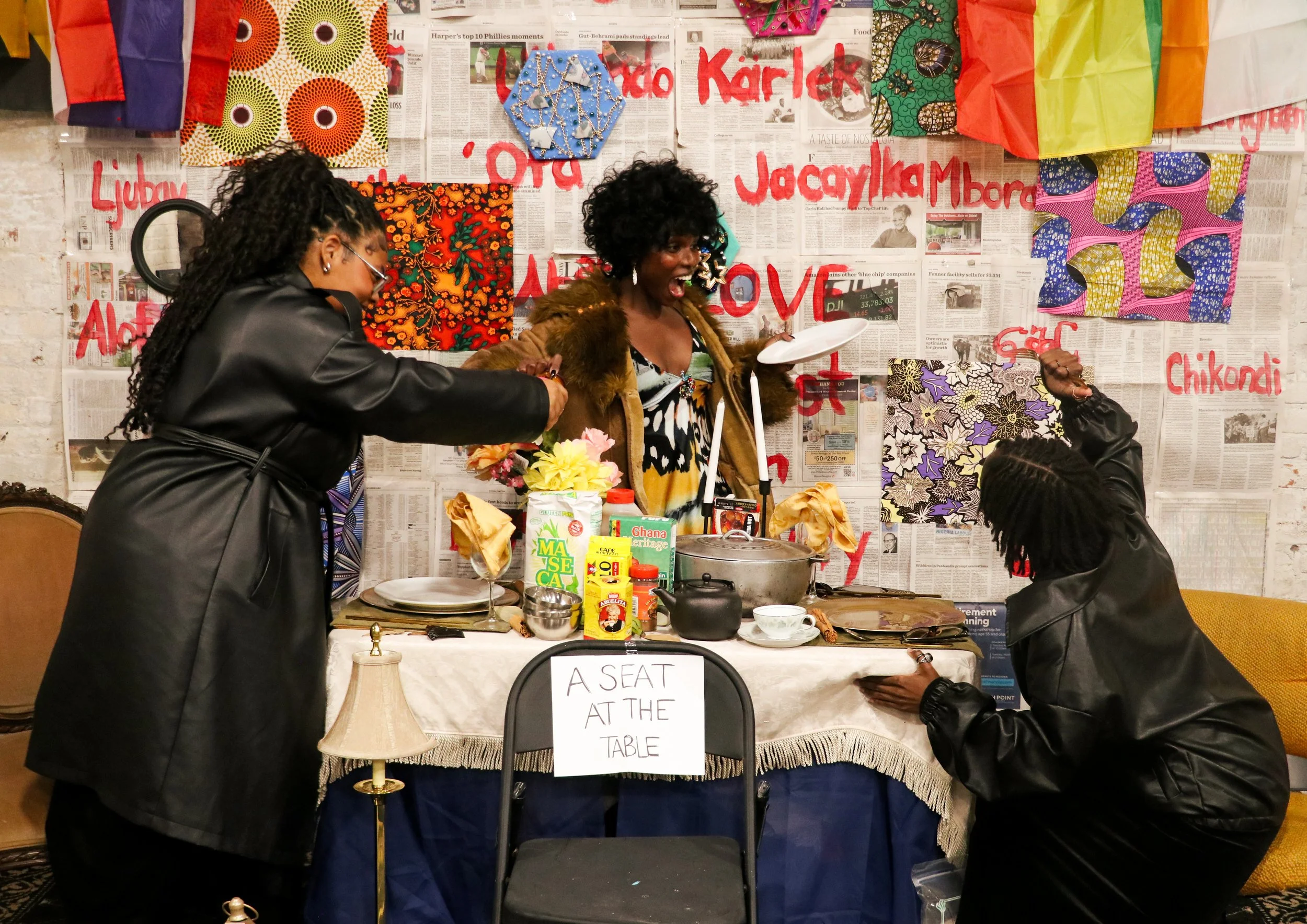
Artist: Shauna Moon
Title: A Seat at The Table
Year: 2026
Location: New York Fashion Week, Brooklyn, NY
Medium: Installation (chairs, table, textiles, printed matter, archival objects, and mixed media)
Presented within: Fashion presentation environment
Documentation: Photo
Artist Statement:
A Seat at The Table is an installation inspired by Shirley Chisholm, the first Black woman to run for president in the U.S., who said “If they don’t give you a seat at the table, bring a folding chair.” During Bad Bunny’s Super Bowl performance, he emphasized that “We are America,” as are the countries that constitute North, South, and Central America. Continuing with the messaging from his performance, the installation explored the diaspora as a physical condition and emotional inheritance, emphasizing that culture is a direct reflection of anthropological diasporas. The installation focuses on motifs and elements that define culture such as; language, food, and art. Installed within the context of New York Fashion Week, the work exists as a spatial intervention—a moment of reflection where diasporic presence is not symbolic, but embodied.
The table functions as an anchor. It breaks the typical format of a table setting, a place known for gathering, negotiation, storytelling, and survival. For diasporic communities, the table represents nostalgia and belonging. The table hosts representation of multiple cultures through cookware, cutlery, foods, spices, and placemat settings. The chairs surrounding the table are all different, yet unified at a single location. The foods depicted are historic and representative of global agricultural economies. The table preserves culture while identifying it, as it is redefined through time.
By placing the installation within a fashion environment, an ecosystem rooted in image and cultural production, the work asserts the presence that fashion draws its influence from. In an industry where non-conformity is a preference, the installation exists to create tension. What are its origins? Who was here first? How has culture evolved?
A Seat at The Table is interactive. It makes the diaspora physically undeniable. It creates our own seat at the table.
Installation Context:
Installed during New York Fashion Week, the installation was created in consideration of the Brooklyn Creators Market Fashion Show theme “Diaspora.” The installation existed during the marketplace and the reception of the fashion show. As models, designers, and guests moved through the space, the installation remained still.
The work did not ask for permission to exist. It assumed its place.
Conceptual Themes:
Diaspora as a physical and spatial condition
How diasporic individuals negotiate environments that were not originally designed for them
Belonging and permission
Creating opportunities despite systemic exclusion
Memory as material
Personal and collective histories through objects preserved through time
Cultural inheritance and continuity
Language, tradition, and identity are shared and sustained
Space-making as resistance
Stillness and existence as a form of activist resistance
Global economic history
How the world relates and how we create culture
Process Notes:
A Seat at The Table emerged from a concept to an installation within a week. The artist was influenced by her personal background of being a first-gen American from Jamaican immigrant parents. Living a dual childhood between the United States and the countryside of Jamaica, the artist utilized her understanding of diasporic identity, spatial belonging, and inherited memory.
Each material was selected for its symbolic and emotional resonance. From Bad Bunny’s Super Bowl performance, “The only thing more powerful than hate is love,” the artist chose to paint “Love” in over forty languages across recycled newspapers. These were then decorated with Ankara fabrics, which have Dutch origins but are popular in West Africa. The use of mirrors was to create moments of reflection and explore the relationship between diasporic children today and their ancestors. Flags of some countries were hung for identity markers as well as to depict how flags are used as cultural representatives.
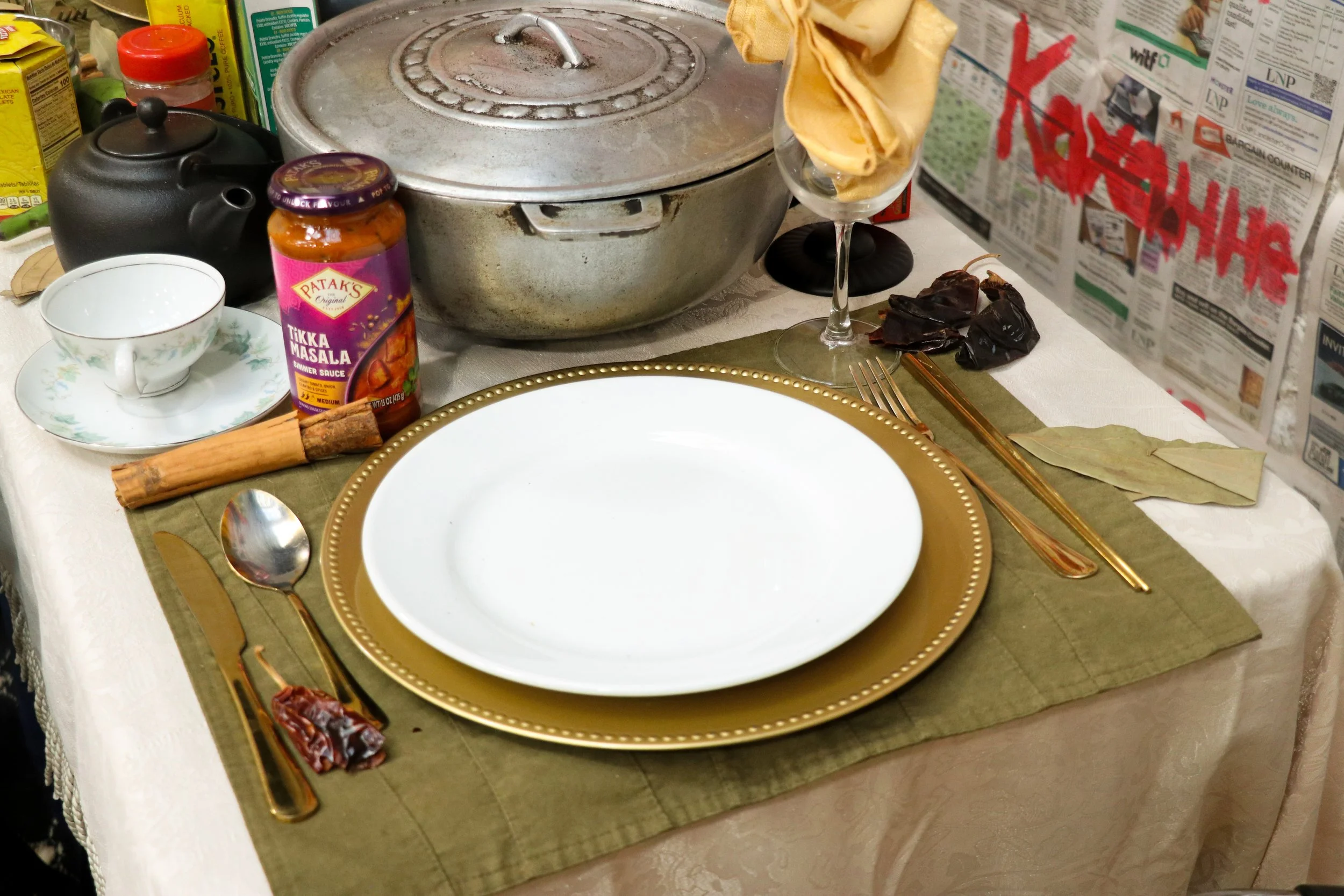
Three panels were created as artistic cultural motifs. One panel included synthetic hair, faux locs, acrylic nails, bamboo earrings, and hair barrettes. These are well showcased in Black culture, however, synthetic hair is a product of the Chinese wig industry, which was then popularized and moved to South Korea. It is meant to define global economic exports and culture. Another panel includes gold chains, string pearls, rice grains, real jade, and broken porcelain. This is meant to showcase Chinese culture. Porcelain originates from China, and later formed Britain’s tea time. The last panel includes jute, wooden beads, plastic beads, feathers, and dried grass to showcase indigenous culture. Indigenous people and cultures exist throughout the globe, such as Taíno yet are rarely recognized.
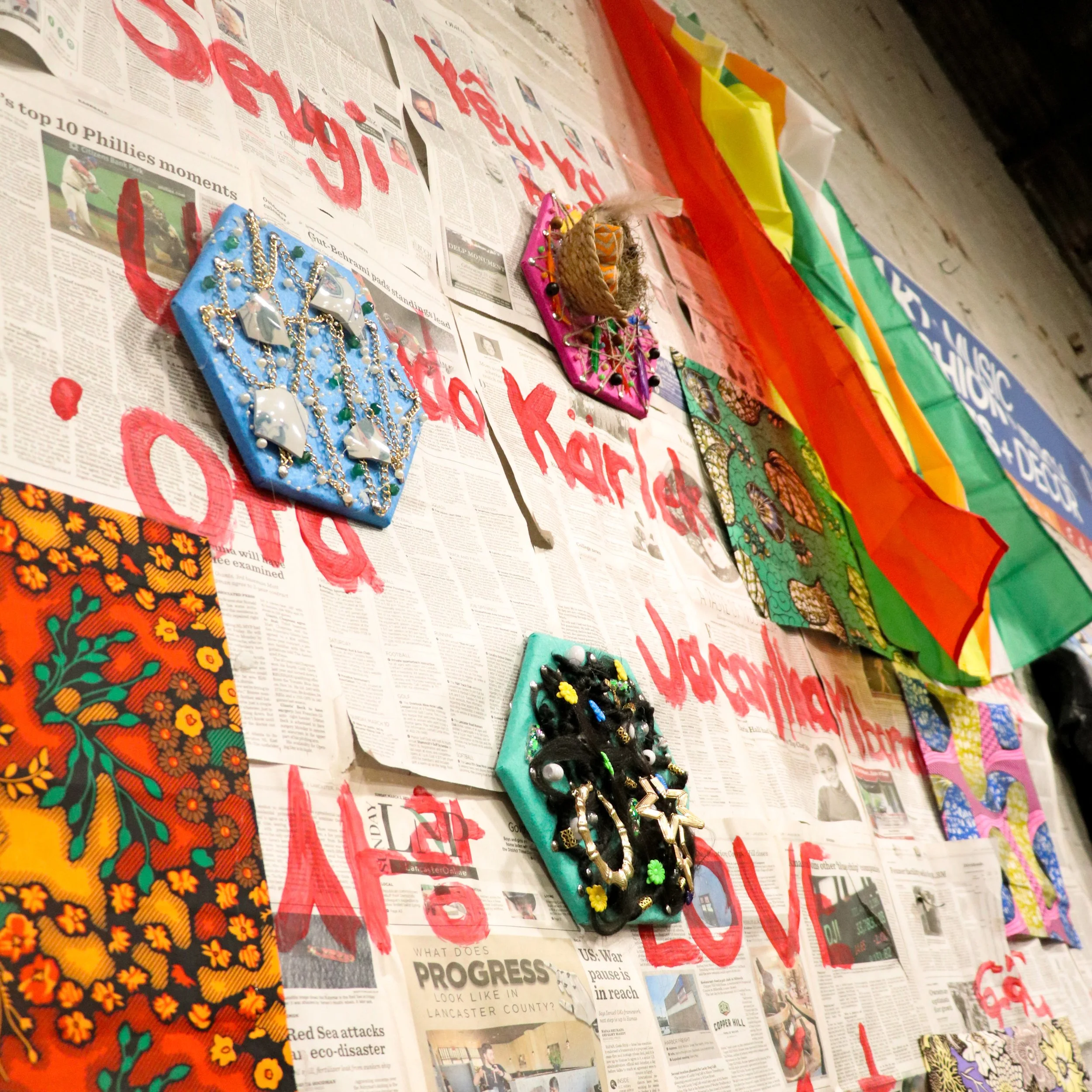
Breaking the traditional placemat setting, the artist purposely chose a knife, spoon, fork, and chopsticks. This was purposefully chosen since each table would look different depending on the culture. The table and tray on the floor indicate foods that are popular within those cultures, have anthropological diasporic ties, or hold global economic importance.
Different chairs were posted along the table to reinforce the message with one clearly marked chair, “A Seat at The Table.”